PNPT internal pivoting guide explains how penetration testers evaluate the transition from externally accessible systems to internal network segments during an authorized assessment. Network pivoting is an essential concept in enterprise penetration testing because an initial foothold does not necessarily provide direct access to every system within an organization.
This guide uses the general structure of the Pasta Mentors lab scenario to explain network boundaries, routing, tunneling, identity relationships, and professional reporting without disclosing machine-specific solutions, credentials, or complete attack paths.
What Is Internal Pivoting in PNPT?
Internal pivoting is the process of using an authorized assessment position within one network segment to evaluate systems or services located in another segment that cannot be reached directly.
In a typical enterprise environment, external services, internal workstations, application servers, and Active Directory infrastructure may exist behind different network boundaries.
The key challenge is understanding which systems can communicate, which security controls govern that communication, and how network access differs from application-level authorization.
A PNPT internal pivoting guide should therefore explain more than tools. It should help candidates understand network architecture and document the security implications of unexpected connectivity.
Understanding the External-to-Internal Network Model
The Pasta Mentors lab discussed in the original article presents an external network, a separate internal segment, and user identities associated with the environment.
This is a useful model for studying enterprise security because it illustrates how different network zones can be connected through shared services, authentication systems, or permitted communication paths.
The important distinction is between network visibility and access permissions.
A system may be reachable without granting a user permission to access its services. Conversely, valid credentials may exist for an internal service that remains unreachable because of routing or firewall restrictions.
External Network Assessment
The external portion of a penetration test establishes which systems and services are exposed to the assessment environment.
Typical areas of interest include web applications, authentication portals, public-facing infrastructure, and the organization’s externally accessible services.
The objective is to understand the attack surface and identify security weaknesses within the agreed scope.
Internal Network Assessment
Internal networks commonly contain workstations, file services, identity infrastructure, application servers, and administrative systems.
These assets may be isolated from public access but still communicate with selected external or intermediary services.
Understanding those relationships helps security teams evaluate whether segmentation controls are functioning as intended.
PNPT Pivoting vs. Tunneling vs. Lateral Movement
These terms are related but describe different activities.
| Concept | Meaning | Security consideration |
|---|---|---|
| Pivoting | Using an intermediate assessment position to reach another network area | Whether segmentation boundaries are appropriately enforced |
| Tunneling | Transporting network traffic through an intermediary connection | Whether traffic is monitored and restricted |
| SOCKS proxy | Forwarding application connections through a proxy service | Which applications and destinations can use the proxy |
| Port forwarding | Relaying traffic between selected network endpoints | Whether forwarding exposes unintended services |
| Lateral movement | Moving between systems using available access or privileges | Whether identity and endpoint controls limit movement |
A PNPT internal pivoting guide becomes more useful when these distinctions are clear.
Pivoting describes a change in network reachability. Tunneling and forwarding are possible communication mechanisms. Lateral movement concerns access between systems and may involve additional authentication and authorization requirements.
These activities should be assessed only within explicitly authorized environments.
How Network Routing Affects Internal Access
Routing determines how packets travel between networks.
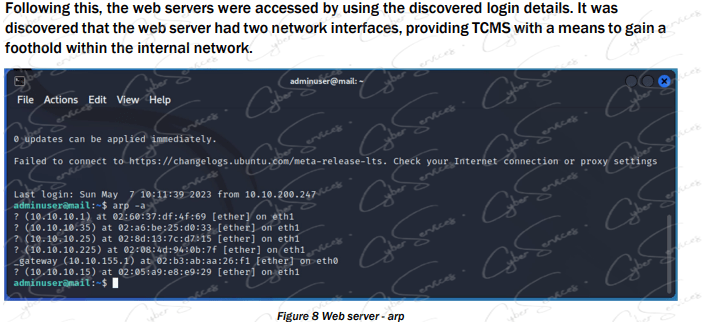
A penetration tester may observe that a host has access to more than one network interface or subnet. That observation alone does not prove that traffic can pass freely between those networks.
Successful communication depends on routing rules, firewall policies, host configuration, and the behavior of intermediate systems.
When analyzing a segmented environment, useful questions include:
- Which network boundaries exist?
- Which systems are intended to communicate?
- Are access restrictions enforced consistently?
- Do intermediary services expose unnecessary connectivity?
- Is network activity appropriately logged and monitored?
These questions support a methodical assessment without assuming that every reachable destination represents a vulnerability.
SOCKS Proxies and Tunneling Concepts
A SOCKS proxy can relay supported application connections through an intermediary. Tunneling describes the transport of traffic through another communication channel.
Both concepts are relevant to internal network testing because they help explain how traffic may cross network boundaries.
However, they are not interchangeable with unrestricted network access.
A proxy may support certain application protocols while other traffic requires different routing behavior. A tunnel may establish connectivity without providing credentials or permissions for the destination service.
For PNPT preparation, candidates should understand the capabilities and limitations of each approach before using them in an authorized lab.
Common Connectivity Problems
Several issues can complicate internal network assessments:
Incorrect routing assumptions. A host may have multiple interfaces without forwarding traffic between them.
Firewall restrictions. Network policy may permit specific services while blocking others.
Name resolution differences. Internal DNS records may not be available from an external assessment position.
Protocol limitations. A proxy or tunnel may not support every type of traffic.
Authentication failures. Network connectivity does not guarantee application access.
Separating these issues makes troubleshooting more systematic and prevents incorrect conclusions about the environment.
Identity Relationships Across Network Segments
The original Pasta Mentors scenario highlights the relationship between organizational identities, external services, and internal infrastructure.
This is an important theme in enterprise penetration testing.
An organization may use the same identity provider across web applications, email systems, remote access services, and Active Directory resources.
A PNPT internal pivoting guide should explain how these relationships influence risk without assuming that shared usernames or similar account names automatically provide additional access.
Authentication Is Not Authorization
Authentication verifies an identity. Authorization determines what that identity is permitted to do.
An account accepted by one service may have no privileges on another.
Likewise, the existence of a common username across systems does not prove credential reuse or a security weakness.
Security assessments should distinguish confirmed observations from hypotheses and avoid presenting unverified assumptions as findings.
Why Domain Naming Consistency Matters
The original article identifies a spelling difference between two domain references.
Such inconsistencies can result from transcription mistakes, lab documentation errors, legitimate alternate domains, or configuration issues.
They should be investigated as data-quality observations rather than immediately classified as exploitable vulnerabilities.
This distinction is particularly important when preparing professional reports.
Active Directory and Network Segmentation
Active Directory often plays a central role in Windows enterprise environments.
Domain controllers, member servers, workstations, and administrative systems may communicate across different network segments.
A well-designed environment should limit unnecessary connectivity and apply least-privilege principles to both network access and account permissions.
For PNPT candidates, relevant knowledge areas include:
- Domain and local account distinctions
- Kerberos and NTLM authentication concepts
- Administrative privilege boundaries
- Network segmentation and firewall policy
- Service access controls
- Credential storage and protection
- Logging and detection of unusual authentication activity
These topics help explain how network configuration and identity management jointly influence enterprise security.
The Pasta Mentors Lab: Key Learning Objectives
The Pasta Mentors scenario provides a useful framework for understanding how external and internal environments relate to one another.
The original article identifies separate network segments, organizational domain information, and user-related context.
Rather than treating those details as a guaranteed solution, candidates should use the scenario to develop three core skills.
1. Recognizing Network Boundaries
Determine which services belong to which security zones and understand why some systems are not directly accessible.
2. Interpreting Identity Context
Evaluate how account information relates to authentication services without assuming that an identity is valid everywhere.
3. Explaining Security Impact
Document why an unexpected communication path or excessive privilege would matter to the organization.
The goal is to build transferable assessment skills rather than memorize a specific laboratory sequence.
Common PNPT Internal Pivoting Mistakes
Even experienced testers can draw incorrect conclusions when examining segmented networks.
One common mistake is confusing successful connectivity with successful authorization. Another is assuming that a system with multiple network interfaces automatically provides unrestricted access between subnets.
Other problems include overlooking DNS behavior, ignoring firewall restrictions, failing to distinguish hypotheses from verified findings, and documenting technical activity without explaining its security relevance.
A reliable PNPT internal pivoting guide should encourage candidates to maintain clear notes about network relationships, observed restrictions, and the evidence supporting each conclusion.
Reporting Internal Pivoting Findings
Professional reporting is an important part of PNPT preparation.
When an assessment identifies an unexpected network path or access-control weakness, the report should explain the affected boundary, observed behavior, conditions required, potential impact, and recommended remediation.
For example, an internal segmentation finding may recommend limiting unnecessary communication between network zones, restricting administrative access, and improving monitoring.
A clear report should include:
- The assessed network boundary and authorized scope.
- The observed connectivity or access-control issue.
- Evidence supporting the finding.
- The potential organizational impact.
- Practical remediation recommendations.
Avoid including live credentials, private keys, sensitive user information, or unnecessary environment-specific details in publicly shared reports.
For a broader explanation of PNPT documentation expectations, see our PNPT Exam Preparation Guide.
How to Practice Internal Pivoting for PNPT
The most effective way to develop internal pivoting skills is to work with authorized, segmented laboratory environments.
Candidates should practice understanding network diagrams, recognizing routing boundaries, distinguishing different proxy and tunnel technologies, and documenting observed communication restrictions.
Study sessions should also include Active Directory fundamentals, Windows and Linux networking, DNS, authentication, and professional reporting.
For official certification information, consult TCM Security’s PNPT certification page.
Supplementary study materials can help organize technical concepts, but they should not replace independent laboratory practice or the official training requirements.
Explore PNPT Preparation Resources
CyberServices.Store offers PNPT-related digital resources for candidates who want additional preparation material.
Browse the PNPT certification resources collection to review available products, descriptions, and study options.
Explore PNPT Exam Preparation Materials
PNPT Internal Pivoting Guide FAQ
What is internal pivoting in PNPT?
Internal pivoting is the process of evaluating connectivity to another network segment through an intermediate assessment position. It helps testers understand network segmentation and access boundaries.
What is the difference between pivoting and lateral movement?
Pivoting concerns network reachability through an intermediary. Lateral movement concerns movement between systems using access or privileges. They can be related but are not the same activity.
Does PNPT involve Active Directory?
PNPT preparation includes Active Directory assessment, identity security, and enterprise network penetration testing concepts. Refer to TCM Security for the current exam objectives.
Why are SOCKS proxies relevant to pivoting?
SOCKS proxies can relay supported application connections through an intermediary, making them useful for understanding network access across different segments.
Is port forwarding the same as pivoting?
No. Port forwarding is a traffic-relaying mechanism. Pivoting is the broader concept of reaching another network area through an intermediate position.
Why might an internal host remain unreachable?
Possible reasons include routing restrictions, firewall policies, network segmentation, name resolution problems, and protocol limitations.
Does network access mean a user has administrative privileges?
No. Network reachability and account privileges are separate security controls.
What does the Pasta Mentors scenario demonstrate?
The scenario illustrates external and internal network boundaries, organizational identity context, and the importance of evaluating connectivity and permissions together.
How should internal pivoting findings be documented?
Document the assessed boundary, observed behavior, supporting evidence, potential impact, and remediation recommendations while protecting sensitive information.
Where can I find PNPT study materials?
Visit the CyberServices.Store PNPT resources page for related preparation materials and technical guides.
Final Thoughts
A PNPT internal pivoting guide should help candidates understand how network boundaries, routing, authentication, and access controls interact during an enterprise penetration test.
The Pasta Mentors scenario illustrates why external visibility does not automatically translate into internal access and why identity relationships must be interpreted carefully.
By developing a systematic approach to network analysis, technical validation, and professional reporting, candidates can strengthen skills that apply to both PNPT preparation and real-world authorized security assessments.