DeHospital | Detailed Writeup
Last updated: September 2026
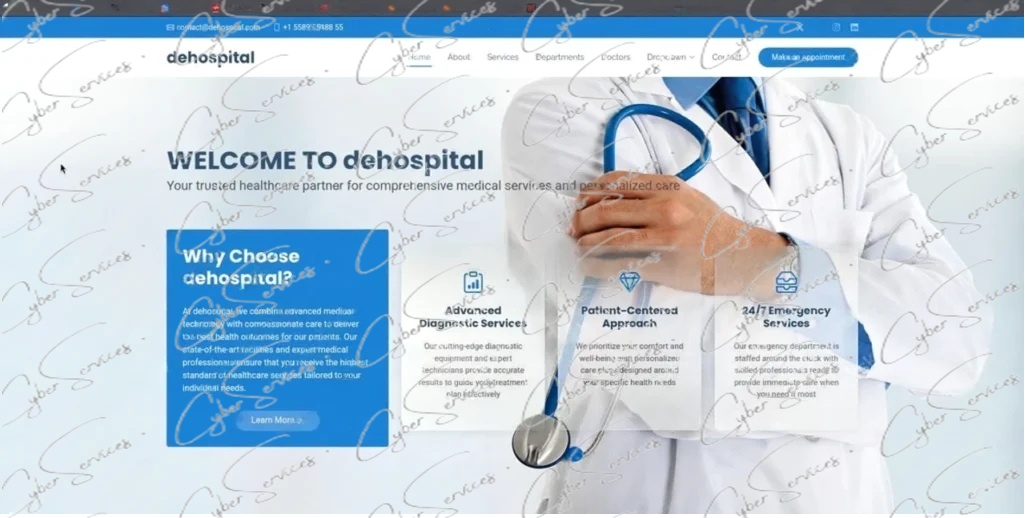
- Full breakdown of the DeHospital lab scenario
- Key enumeration and exploitation techniques
- Privilege escalation steps and tool usage
- Clearly organized commands, notes, and methodology
Buy
OSEP Preparation Guides & Exam Experience
OSEP Common Mistakes
Learn common OSEP exam mistakes, PEN-300 preparation pitfalls, and advanced penetration testing certification tips.
Read OSEP MistakesOSEP Exam Experience
Explore OSEP exam experience writeup, preparation workflow, and PEN-300 certification insights from candidates.
Read OSEP Experience


The catalogue
Everything we supply for the OSEP, with current prices. Where a target has a full report on this page the card jumps straight to it.
Support and services
Help during the exam and with the report, rather than a written report.
2 items in this catalogue.
OSED Certification and the Dehospital Machine: What Actually Matters
If you’ve spent any time in the offensive security space, you already know this: not all certifications carry real weight. Some look good on paper, but fall apart the moment you’re expected to perform under pressure. The OSED certification (Offensive Security Exploit Developer) is not one of those.
This is where things get serious. And interestingly, concepts like the so-called Dehospital machine—while less standardized—fit into the same mindset: controlled chaos, realistic environments, and a focus on exploitation rather than theory.
Let’s break this down properly.
What Is the OSED Certification?
The OSED certification is part of Offensive Security’s advanced track, designed for people who already understand the basics and want to move into exploit development.
This isn’t a beginner-friendly certification. It assumes you’re comfortable with:
- Buffer overflows
- Basic reverse engineering
- Assembly-level debugging
- Windows internals
The goal is simple, but brutal in execution: you learn how to develop exploits from scratch.
No shortcuts. No multiple-choice questions. Just you, a vulnerable application, and a debugger staring back at you.
Is the OSED Certification Still Relevant in 2026?
Yes—and arguably more than ever.
While many certifications have shifted toward theory-heavy or compliance-based content, OSED remains deeply practical. The industry still values people who can actually:
- Identify memory corruption vulnerabilities
- Bypass protections like DEP and ASLR
- Build working exploits under real constraints
Those skills haven’t gone out of style. If anything, they’ve become rarer.
That’s exactly why OSED stands out.
What Changed Recently in the OSED Exam?
The core philosophy hasn’t changed—but the execution has evolved.
Recent updates focus more on:
- Modern Windows protections
- Cleaner exploit development workflows
- Less reliance on outdated techniques
- More realistic lab environments
In short, it’s less about memorizing tricks and more about understanding why an exploit works.
If you’re expecting a “follow the steps and pass” experience, you’re going to struggle.
Where the Dehospital Machine Fits In
Now let’s talk about the Dehospital machine.
This isn’t an official Offensive Security term, but in practice, it represents something very real: a deliberately unstable, highly vulnerable environment designed to push your exploitation skills.
Think of it as a hybrid between:
- A CTF challenge
- A lab machine
- A real-world misconfigured system
The idea behind a Dehospital-style machine is simple: remove safety nets and force the attacker (you) to adapt.
Why This Concept Matters for OSED
Here’s the truth most people don’t say out loud:
You don’t pass OSED just by watching videos or reading PDFs.
You pass it by failing repeatedly in environments that don’t behave nicely.
That’s exactly what a Dehospital machine simulates.
- Services crash unexpectedly
- Offsets don’t align perfectly
- Protections behave inconsistently
- Debugging gets messy
And that’s the point.
Because in the real world, nothing is clean.
The Skill Overlap: OSED vs Dehospital Environments
There’s a strong overlap between what OSED expects and what Dehospital-style machines force you to do.
1. Adaptability
OSED doesn’t reward memorization. It rewards thinking.
Dehospital machines punish rigid approaches.
2. Debugging Under Pressure
When your exploit fails—and it will—you need to understand why.
Both environments demand that level of clarity.
3. Manual Exploitation
Automation won’t save you here.
You need to control memory, step by step.
4. Patience
This is the part people underestimate.
Exploit development is slow, frustrating, and often unclear.
If you can’t tolerate that, OSED will expose it quickly.
Common Mistakes People Make
Let’s be honest—most failures come from predictable mistakes.
Over-relying on tools
Tools are helpful, but they don’t replace understanding.
If you don’t know what’s happening in memory, you’re guessing.
Skipping fundamentals
Assembly and Windows internals aren’t optional here.
Ignoring them will cost you time—and probably the exam.
Practicing in “clean” environments only
If everything works perfectly in your lab, you’re not preparing properly.
You need messy systems. That’s where growth happens.
How to Prepare the Right Way
If you’re aiming for the OSED certification, your preparation strategy needs to reflect reality.
Build your own vulnerable environments
Don’t just rely on provided labs. Create instability on purpose.
Practice without guides
Guides are useful early on, but eventually, they become a crutch.
Focus on debugging
Spend more time in a debugger than in a browser.
Embrace failure
This isn’t motivational fluff—it’s practical advice.
Every failed exploit teaches you something critical.
The Bigger Picture
Here’s what separates OSED from most certifications:
It doesn’t just test knowledge—it tests capability under uncertainty.
And that’s exactly what concepts like the Dehospital machine reinforce.
Together, they push you toward a mindset where:
- You expect things to break
- You understand systems at a deeper level
- You stop relying on perfect conditions
That’s not just useful for an exam.
That’s what real offensive security work looks like.
Final Thoughts
The OSED certification isn’t for everyone—and that’s intentional.
It filters out people who are looking for quick wins and highlights those who are willing to dig deep into how systems actually work.
Pair that with the mindset behind a Dehospital machine, and you get something powerful:
a training approach that prepares you for situations where nothing is predictable.
If you’re serious about exploit development, this is the direction that makes sense.
Not easy.
Not fast.
But definitely worth it.