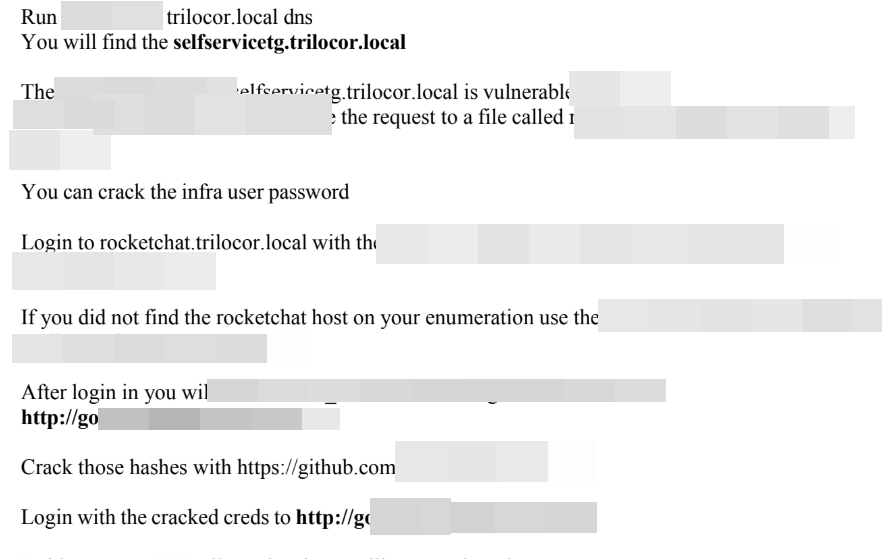
CPTS Flag 8&9 is a search term associated with the challenging middle stages of the Hack The Box Certified Penetration Testing Specialist (HTB CPTS) examination. Candidates researching these stages often want to understand why their enumeration has stalled, whether they have overlooked an access relationship, and how to improve their methodology when working through a complex enterprise network.
The important distinction is that Flag 8 and Flag 9 are not publicly documented by Hack The Box as fixed vulnerabilities, machines, or attack paths. Their exact solutions should not be inferred from third-party discussions.
This guide focuses on the transferable skills behind difficult CPTS laboratory stages: systematic enumeration, credential analysis, Active Directory permissions, internal network visibility, pivoting concepts, and evidence-based reporting.
What Are CPTS Flag 8&9?
The CPTS Flag 8&9 terminology refers to the eighth and ninth flags discussed by candidates in relation to the practical HTB CPTS assessment.
In the examination, flags are used to demonstrate progress toward the required assessment objectives.
However, a flag number does not necessarily identify a particular exploitation technique.
Flag 8 is not officially defined as a Kerberos challenge, and Flag 9 is not officially defined as a pivoting challenge.
Without authorized documentation of a specific laboratory, assigning a vulnerability or system to either flag would be speculation.
Why Candidates Search for Flag 8 and Flag 9
Candidates often encounter difficulty when their initial enumeration results no longer reveal an obvious next step.
This can happen in any complex penetration testing exercise.
A candidate may have identified several systems, collected technical observations, or established limited access but still lack a complete understanding of the network’s security relationships.
The most useful response is to revisit the evidence systematically rather than assume that a particular tool or exploit must be missing.
HTB CPTS Exam Overview
The HTB Certified Penetration Testing Specialist certification evaluates practical penetration testing skills in an enterprise-style environment.
The examination involves black-box assessment, Windows and Linux security, web applications, Active Directory, internal network analysis, and professional reporting.
| Exam area | Description |
|---|---|
| Certification | HTB Certified Penetration Testing Specialist |
| Provider | Hack The Box |
| Prerequisite | Complete the Penetration Tester Job Role Path |
| Examination duration | 10 days |
| Environment | Simulated enterprise infrastructure |
| Main activities | External and internal penetration testing |
| Evidence | Examination flags and technical findings |
| Reporting | Commercial-grade penetration testing report |
| Report language | English |
| Submission | Official examination dashboard |
Candidates must meet the applicable point requirement and submit a report that satisfies HTB’s quality standards.
Hack The Box does not publicly define the precise technical requirements of individual numbered flags.
For authoritative examination information, review the official HTB CPTS certification page.
CPTS Flag 8&9: Why Enumeration Becomes Difficult
A common reason for difficulty in an enterprise penetration testing laboratory is incomplete understanding of the available attack surface.
Early observations may be straightforward, while later stages require candidates to correlate information from multiple systems.
This is not proof that Flag 8 or Flag 9 specifically requires any particular technique.
It is a general characteristic of complex network assessments.
Incomplete Service Discovery
A network may contain several exposed services with different authentication requirements and security configurations.
If an analyst investigates only the most obvious application, important information may remain undiscovered.
A disciplined assessment records the services identified, the evidence collected, and the questions that remain unresolved.
Unexamined Application Functionality
Web applications often contain multiple user roles, endpoints, and administrative functions.
An analyst may identify the application but overlook functionality relevant to its security boundaries.
For authorized practice, it is useful to review authentication, authorization, file handling, input processing, and application configuration.
Missing Relationships Between Findings
Individual findings may appear unrelated until they are evaluated together.
For example, a user account, a shared resource, and a service permission may represent separate observations that require further contextual analysis.
The goal is to understand whether the evidence establishes a meaningful security relationship.
A Structured CPTS Troubleshooting Methodology
Candidates studying CPTS Flag 8&9 should develop a repeatable process for investigating stalled laboratory assessments.
The following framework is intended for independent, authorized practice environments.
Step 1: Revisit the Known Attack Surface
Review the systems and services already identified.
Separate confirmed observations from assumptions.
Ask whether each service has been sufficiently investigated and whether any relevant functionality remains unexplored.
A useful inventory might contain:
| Item | Questions to answer |
|---|---|
| Host | What role does the system perform? |
| Service | What functionality is exposed? |
| Authentication | Which identities are recognized? |
| Permissions | What actions are authorized? |
| Network | Which communications are permitted? |
| Evidence | What supports the current conclusion? |
| Status | Which questions remain unresolved? |
Step 2: Review Identity and Access Context
Enterprise environments commonly use centralized identities and permissions.
A credential or authenticated session is meaningful only in relation to the systems and resources that recognize it.
During authorized practice, distinguish between account validity, application access, local permissions, and domain privileges.
Do not assume that successful authentication on one system grants administrative access elsewhere.
Step 3: Evaluate Network Visibility
Network segmentation can affect which services are reachable from different authorized assessment positions.
A service that is inaccessible from one network location may be available to a legitimate system in another segment.
Understanding network boundaries is an important penetration testing skill.
However, network connectivity alone does not establish that an application is vulnerable or that access is authorized.
Step 4: Reassess Technical Hypotheses
When an investigation stalls, examine the assumptions behind the current approach.
Does the suspected weakness actually match the software configuration?
Is the evidence sufficient to support the hypothesis?
Have alternative explanations been considered?
A good methodology includes the willingness to reject an unsupported theory.
Step 5: Preserve Findings and Continue Systematically
Record validated observations and unresolved questions.
Avoid repeating the same investigation without new evidence.
Structured notes make it easier to identify gaps and maintain progress during lengthy assessments.
Active Directory Concepts Relevant to CPTS Preparation
Active Directory is a major part of the HTB CPTS knowledge domains.
Candidates should understand how Windows enterprise identities, permissions, and authentication systems interact.
These subjects are relevant to CPTS preparation generally; they are not confirmed solutions for CPTS Flag 8&9.
Domain Users and Groups
Active Directory provides centralized identity and access management.
Users and groups can be assigned permissions across applications, servers, and other enterprise resources.
A professional assessment evaluates whether those permissions align with legitimate operational requirements.
Kerberos and NTLM
Kerberos and NTLM are authentication technologies used in Windows environments.
Candidates should understand their general operation, the differences between authentication and authorization, and how configuration weaknesses can create security risks.
Access Control and Delegation
Permissions and delegated administration determine which identities can manage particular resources.
Excessive privileges may increase organizational risk.
Understanding access relationships is important when evaluating complex enterprise security configurations.
Service Accounts
Applications and infrastructure services may operate using dedicated identities.
These accounts should follow least-privilege principles and use appropriate credential management.
Unnecessary privileges or poorly protected authentication material can increase the consequences of compromise.
CPTS Flag 8&9 and Pivoting Concepts
Pivoting is an important topic in the official CPTS curriculum.
It describes techniques used during authorized assessments to understand or access network resources through permitted assessment positions.
Candidates must understand network routing, segmentation, service reachability, and the relationship between different security zones.
However, no public official source confirms that CPTS Flag 8&9 corresponds to specific pivoting objectives.
Why Network Segmentation Matters
Enterprise networks often separate workstations, servers, administrative systems, and sensitive services.
Segmentation helps reduce unnecessary communication and limit the potential impact of a security incident.
A security assessment should determine whether the intended boundaries are implemented effectively.
Reachability vs. Authorization
A network path does not automatically grant permission to use the destination service.
Authentication and authorization remain separate requirements.
This distinction is especially important when interpreting findings from internal network assessments.
Documenting Network Relationships
A simple network diagram can help explain observed connectivity and system roles.
For example, an authorized practice report may distinguish an external-facing application, an internal workstation segment, and a protected server network.
Such diagrams should reflect observed evidence rather than assumed access paths.
Credential Analysis and Privilege Boundaries
Another important area for candidates researching CPTS Flag 8&9 is credential security.
During legitimate enterprise assessments, security professionals evaluate how authentication material is stored, managed, and protected.
Credential Exposure
Credentials may be exposed through insecure storage, inappropriate permissions, or poor operational practices.
The significance of a finding depends on the sensitivity of the material and the access it enables.
Password Reuse
Reusing credentials across different systems can increase the impact of a compromise.
Organizations should apply unique credentials, strong access controls, and appropriate monitoring.
Privilege Separation
Standard user accounts and administrative identities should have clearly defined responsibilities.
Excessive privileges increase risk.
Candidates should understand how local and domain permissions differ and why successful authentication does not imply unrestricted access.
Avoiding Common CPTS Enumeration Mistakes
Candidates may lose time because they repeatedly pursue unsupported assumptions.
The following mistakes are common in authorized penetration testing laboratories.
Relying entirely on automated tools. Automation can accelerate discovery, but it does not replace manual reasoning.
Ignoring application context. A service banner rarely provides a complete picture of the application’s security posture.
Assuming a credential works everywhere. Account permissions differ across systems.
Overlooking documentation. Poor notes can cause repeated investigation and lost evidence.
Confusing a hypothesis with a finding. A suspected weakness must be validated before it becomes a reportable conclusion.
Memorizing another candidate’s experience. A third-party description of a difficult flag does not establish a universal examination path.
CPTS Flag 8&9: Building a Better Investigation Checklist
A useful study checklist helps candidates evaluate their methodology without depending on confidential exam information.
| Review area | Preparation objective |
|---|---|
| Host inventory | Understand the authorized environment |
| Service enumeration | Identify relevant exposed functionality |
| Web application review | Evaluate authentication and authorization |
| Identity analysis | Understand account and group permissions |
| Network visibility | Interpret segmentation and reachability |
| Privilege boundaries | Distinguish ordinary and administrative access |
| Evidence quality | Support conclusions with observations |
| Reporting | Document findings clearly and reproducibly |
This checklist is not a solution to Flag 8 or Flag 9.
It is a transferable framework for improving practical penetration testing performance.
Professional Reporting for HTB CPTS
The HTB CPTS examination requires a commercial-grade penetration testing report.
Collecting the necessary flags is not sufficient if the submitted documentation does not meet the required quality standards.
The report should explain the assessment scope, methodology, technical findings, business impact, and recommended remediation.
Recommended Practice Report Structure
- Executive summary
- Assessment scope and methodology
- Asset and service inventory
- Confirmed vulnerabilities
- Technical evidence and validation
- Risk and business impact
- Remediation recommendations
- Conclusion and limitations
Candidates should begin documenting findings early rather than waiting until the end of an extended assessment.
The official examination dashboard provides the relevant submission requirements and report template.
Evidence and Reproducibility
A high-quality report explains what was observed, why the finding matters, and how the conclusion was validated.
Screenshots without context are not a substitute for technical explanation.
Similarly, a report should not claim successful exploitation when the available evidence establishes only a suspected weakness.
How to Prepare for Challenging CPTS Laboratory Stages
The best preparation for CPTS Flag 8&9 is not to memorize another person’s examination experience.
Instead, develop skills that transfer across unfamiliar systems.
Complete the Penetration Tester Job Role Path
Hack The Box requires candidates to complete the associated training path before attempting the certification.
This provides the foundation for the examination’s technical objectives.
Practice Active Directory Assessments
Use authorized training environments to study domain architecture, authentication, access control, and Windows enterprise security.
Improve Manual Enumeration
Learn to interpret technical observations rather than relying solely on automated tool output.
Practice Network Segmentation Analysis
Understand routing, connectivity, and the security purpose of internal network boundaries.
Write Professional Reports
For each completed practice assessment, document the evidence, findings, impact, and remediation.
These skills remain valuable regardless of how a particular examination scenario is structured.
CPTS Study Reports and Preparation Resources
CyberServices.Store provides supplementary CPTS study resources, technical reports, and penetration testing preparation materials.
These resources can support independent learning in enumeration, Active Directory, Windows and Linux security, internal network assessment, and professional reporting.
Before purchasing any third-party resource, review its scope, format, and intended educational use.
Third-party materials should supplement official Hack The Box Academy training rather than replace independent examination work.
Explore HTB CPTS Study Materials
For authoritative certification requirements, consult the official HTB CPTS certification guide.
CPTS Flag 8&9 FAQ
What does CPTS Flag 8&9 mean?
CPTS Flag 8&9 refers to the eighth and ninth flags discussed in connection with the HTB CPTS practical examination. Their exact technical objectives are not publicly defined in official documentation.
Is CPTS Flag 8 an Active Directory challenge?
Hack The Box does not publicly confirm that Flag 8 always corresponds to a specific Active Directory technique or system.
Is CPTS Flag 9 related to pivoting?
Pivoting is part of the CPTS curriculum, but there is no verified official statement assigning a fixed pivoting objective to Flag 9.
Why do candidates struggle with CPTS Flag 8 and Flag 9?
Some candidates report difficulty during intermediate stages of the assessment. Common general challenges include incomplete enumeration, complex access relationships, and unsupported assumptions.
Are CPTS flags always in the same order?
Official public documentation does not establish a universal mapping between specific flag numbers and technical vulnerabilities.
How many days does the CPTS exam last?
The official examination window is 10 days.
Does CPTS require a professional report?
Yes. Candidates must submit a commercial-grade penetration testing report that meets Hack The Box’s quality requirements.
Can I pass CPTS by collecting flags alone?
No. Hack The Box requires both the applicable point threshold and an acceptable professional report.
What should I study for difficult CPTS stages?
Focus on manual enumeration, Windows and Linux security, Active Directory permissions, internal network concepts, privilege escalation, and evidence-based reporting.
Can AI tools solve CPTS exam tasks for me?
No. Hack The Box prohibits using AI to directly solve examination tasks or generate the entire report. Its guidance permits limited reference and debugging assistance within specified boundaries.
Are third-party CPTS walkthroughs official?
No. Independent walkthroughs and study reports are not official Hack The Box certification materials unless explicitly identified as such by the provider.
Where can I find CPTS preparation resources?
Explore the CyberServices.Store CPTS study resource collection and complete the official Hack The Box Academy Penetration Tester Job Role Path.
Final Thoughts
CPTS Flag 8&9 searches highlight an important challenge in practical penetration testing: making progress when the next technical step is not immediately obvious.
Successful candidates need more than familiarity with individual tools. They must interpret evidence, understand enterprise identity systems, evaluate network boundaries, and document security findings professionally.
No publicly verified source establishes a universal solution for the eighth or ninth CPTS examination flag.
The most reliable preparation strategy is to strengthen transferable penetration testing skills through authorized laboratories and official training.
Browse HTB CPTS Study Reports and Preparation Resources