CRTO Guide: Cobalt Strike Arsenal Kit & Dublin–London Infrastructure Attack Path
The CRTO Cobalt Strike guide (Certified Red Team Operator) labs are all about execution. You’re not just identifying weaknesses—you’re actively operating inside a network, moving step by step while trying to stay quiet.
In this scenario, the environment spans multiple segments and regions, including dublin.contoso.com and encrypted/internal zones like ENC. Combined with tools like the Cobalt Strike Arsenal Kit, it creates a workflow that feels very close to a real engagement.
Environment Overview CRTO Cobalt Strike guide
Dublin Domain (dublin.contoso.com)
- DUB-WKSTN-1 → User workstation
- DUB-WKSTN-2 → Another endpoint (often initial foothold)
- DUB-WEB-1 → Web server
- DUB-SQL-1 → Database server
- DUB-DC-1 → Domain Controller
London / Other Segments
- LON-DC-1 → Secondary Domain Controller
- ENC-JMP-1 → Jump server (restricted access zone)
- ENC-FS-1 → File server (likely sensitive data)
This layout immediately suggests:
➡️ Segmentation + lateral movement + pivoting
Initial Access: DUB-WKSTN-2
In most CRTO paths, the starting point is:
➡️ DUB-WKSTN-2
This is typically where your beacon lands.
At this stage, focus on:
- User context
- Network visibility
- Local privilege escalation opportunities
Don’t rush. Stability matters more than speed here.
Stuck on CRTO Exam or feeling the pressure of the exam clock? Stop wasting hours. Download our fully verified CRTO Exam Preparation Pack now and pass on your first attempt!
Cobalt Strike Arsenal Kit: Why It Matters CRTO Cobalt Strike guide
The path:
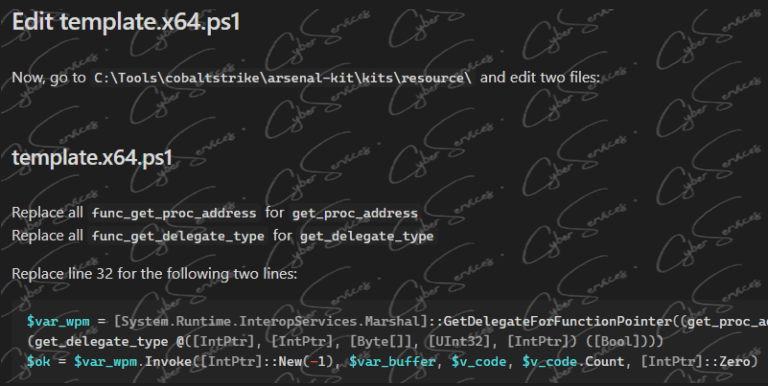
➡️ cobaltstrikearsenal-kitkitsartifactsrc-common
isn’t just a folder—it’s a core part of evasion.
The Arsenal Kit is used to:
- Customize payloads
- Modify artifacts (EXE/DLL)
- Bypass detection mechanisms
In real operations, default payloads get caught quickly.
Using Arsenal Kit allows you to:
- Change signatures
- Adjust memory behavior
- Blend into the environment
➡️ In CRTO, this is often the difference between success and getting flagged.
Expanding Access: From Workstation to Web & SQL CRTO Cobalt Strike guide
After foothold on DUB-WKSTN-2, the next logical steps include:
DUB-WKSTN-1
- Check for credential reuse
- Look for lateral movement opportunities
- Identify logged-in users
DUB-WEB-1
- Web servers often store credentials
- Config files may expose connection strings
- Useful for pivoting into backend systems
DUB-SQL-1
- High-value system
- Often allows command execution
- Can expose service account credentials
➡️ SQL servers frequently become pivot points in CRTO labs.
Privilege Escalation & Credential Access CRTO Cobalt Strike guide
Once you have multiple footholds, your focus shifts to:
- Credential dumping
- Token impersonation
- Service account abuse
These techniques help you move from:
➡️ Local access → Domain-level access
Pay attention to:
- Reused credentials across hosts
- Admin logins on workstations
- Service accounts running on SQL or web servers
Domain Controller: DUB-DC-1 CRTO Cobalt Strike guide
The system:
➡️ DUB-DC-1
is your primary objective in the Dublin domain.
Reaching it usually involves:
- Lateral movement
- Credential escalation
- Careful use of your beacon
Once access is achieved, you effectively control:
- Authentication
- Domain policies
- User management
Cross-Domain Movement: LON-DC-1
The presence of:
➡️ LON-DC-1
indicates another domain or a trusted environment.
At this stage, look for:
- Trust relationships
- Shared credentials
- Cross-domain authentication
CRTO scenarios often expect:
➡️ Pivoting beyond the initial domain
Restricted Segment: ENC Environment
Systems like:
- ENC-JMP-1
- ENC-FS-1
represent a more secure zone.
Access usually requires:
- Valid credentials
- Pivoting through a jump server
- Network tunneling
ENC-JMP-1
- Acts as a gateway
- Often heavily monitored
ENC-FS-1
- Likely contains sensitive files
- May hold credentials or internal data
➡️ This is where stealth becomes critical.
Example Attack Flow CRTO Cobalt Strike guide
A realistic path through this environment might look like:
- Initial beacon on DUB-WKSTN-2
- Lateral movement to DUB-WKSTN-1
- Credential discovery on DUB-WEB-1
- Pivot to DUB-SQL-1 for command execution
- Privilege escalation and credential dumping
- Access to DUB-DC-1
- Identify trust → move to LON-DC-1
- Pivot into ENC-JMP-1
- Access sensitive data on ENC-FS-1
Common Mistakes in CRTO
- Using default payloads (detected quickly)
- Moving too fast and losing access
- Ignoring segmentation
- Not using Arsenal Kit effectively
CRTO is about control—not noise.
Practical Tips CRTO Cobalt Strike guide
- Modify payloads early using Arsenal Kit
- Keep your beacon stable
- Move only when necessary
- Always think one step ahead
Final Thoughts
The CRTO Dublin–London scenario highlights a key reality:
➡️ Modern networks are segmented—but still connected.
Systems like DUB-WKSTN-2, DUB-SQL-1, DUB-DC-1, LON-DC-1, and restricted assets like ENC-JMP-1 and ENC-FS-1 are all part of a single chain.
With tools like the Cobalt Strike Arsenal Kit, your job isn’t just to gain access—
It’s to stay undetected while moving forward.
Stuck on CRTO Exam or feeling the pressure of the exam clock? Stop wasting hours. Download our fully verified CRTO Exam Preparation Pack now and pass on your first attempt!
Vendor: https://www.zeropointsecurity.co.uk/course/red-team-ops
Get the material: CRTO exam material