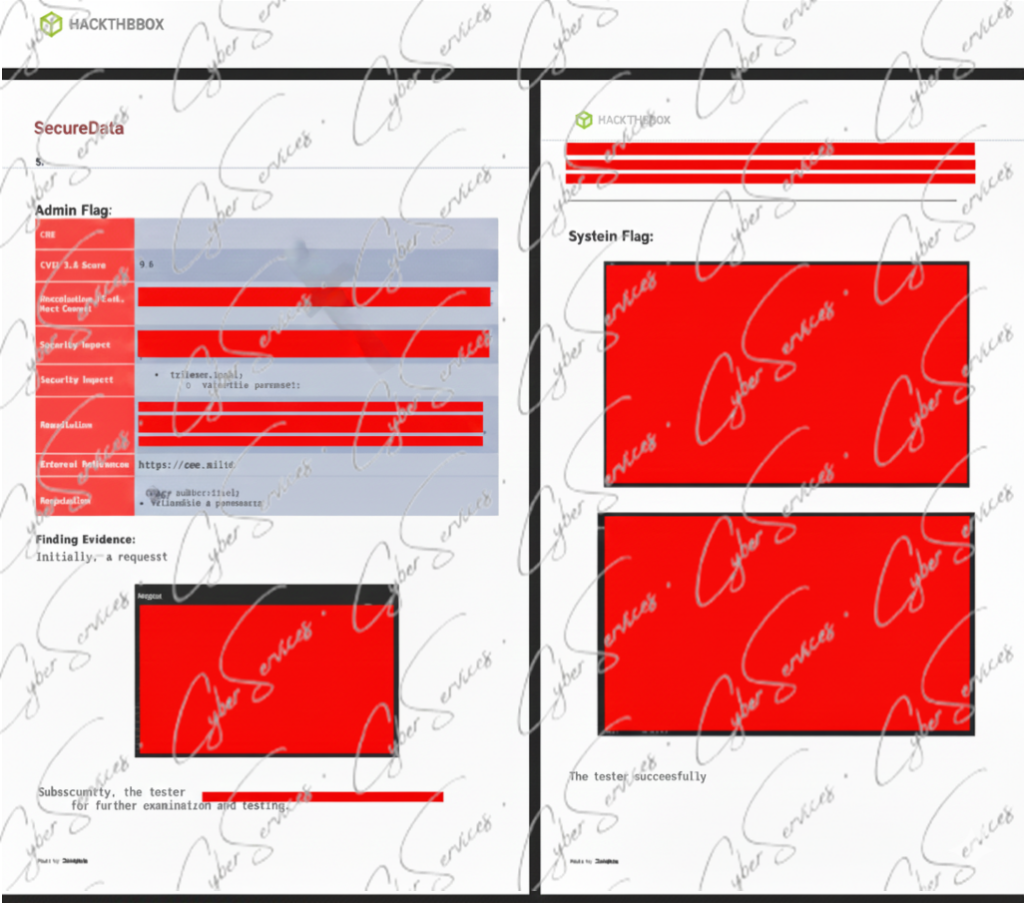
CWES Exam Dump is a search term used by candidates looking for HTB Certified Web Exploitation Specialist study reports, practical web penetration testing resources, and exam preparation materials. CyberServices.Store brings together CWES-related resources for learners who want to strengthen their vulnerability assessment, technical documentation, and application security skills.
The HTB Certified Web Exploitation Specialist (CWES) is a hands-on certification focused on web application penetration testing, web services, APIs, vulnerability analysis, and professional reporting. Preparing for CWES requires more than recognizing common vulnerabilities: candidates must understand application behavior, assess security impact, and communicate findings clearly.
What Is a CWES Exam Dump?
A CWES Exam Dump generally refers to third-party materials advertised as CWES-related reports, writeups, or exam preparation resources. The term is used inconsistently, so candidates should evaluate what a particular resource actually contains before purchasing.
A technical report, study guide, and practical lab walkthrough serve different purposes. A report may demonstrate how findings are organized, while a study guide helps explain concepts and a practice lab develops independent testing skills.
Useful CWES preparation resources should support:
- Understanding web application and API security concepts.
- Recognizing authentication and authorization weaknesses.
- Evaluating common vulnerability classes and their impact.
- Developing consistent testing and documentation habits.
- Reviewing the structure of professional penetration testing reports.
Third-party study materials are not automatically official Hack The Box examination content. They should supplement authorized training rather than replace it.
Explore CWES Exam Dump and Study Report Resources
The CyberServices.Store CWES collection is designed to help visitors compare available materials relevant to web exploitation preparation.
When choosing a CWES Exam Dump resource, consider its stated coverage, file format, technical depth, and intended audience.
| Resource category | Primary purpose |
|---|---|
| CWES technical reports | Study finding documentation and assessment structure |
| CWES writeups | Understand technical reasoning and security concepts |
| Web exploitation guides | Review vulnerability classes and testing methodology |
| Practical labs | Build independent testing and debugging skills |
| Reporting templates | Improve evidence organization and communication |
The available products and current prices are displayed in the CWES collection. Check individual product descriptions for confirmed contents, delivery conditions, and access details.
What Is the HTB Certified Web Exploitation Specialist?
HTB CWES is an intermediate-level, practical web security certification from Hack The Box Academy. It evaluates a candidate’s ability to assess web applications, web services, and APIs, identify vulnerabilities, and produce actionable technical reports.
According to the official HTB CWES certification page, its knowledge domains include information gathering, static and dynamic analysis, vulnerability identification, manual and automated testing, and professional reporting.
Unlike a multiple-choice certification, CWES assesses practical skills in realistic web application environments.
Candidates must complete the Web Penetration Tester job-role path before becoming eligible to begin the examination process.
Who Is CWES Designed For?
CWES is particularly relevant to junior web application penetration testers, entry-level bug bounty hunters, web developers, and cybersecurity professionals developing application security expertise.
Candidates should already understand HTTP, common web vulnerabilities, session management, web technologies, and basic security testing workflows.
CWES Exam Preparation: Core Technical Skills
A strong CWES Exam Dump preparation strategy should align with the official certification domains and focus on transferable skills.
Web Application and API Security
Modern applications often expose functionality through traditional web interfaces, REST APIs, and other web services.
Candidates should understand how requests are processed, how input reaches application components, and how access controls protect sensitive operations.
Relevant topics include endpoint discovery, request validation, authentication, authorization, and the security implications of application design decisions.
Authentication and Authorization
Authentication verifies identity, while authorization determines which resources and operations a user may access.
CWES preparation should include session security, account separation, access-control validation, and common authorization failures such as insecure direct object references.
These concepts are important because a seemingly minor permission weakness can expose sensitive data or functionality.
Injection Vulnerabilities
Injection vulnerabilities arise when untrusted input is handled unsafely by an application or its supporting components.
Candidates should understand the principles behind SQL injection, command injection, server-side template injection, and related vulnerability classes.
The objective is to recognize why a weakness exists, establish its impact in an authorized environment, and document the underlying cause.
Cross-Site Scripting and Browser Security
Cross-site scripting (XSS) remains an important topic in web application testing.
Understanding the differences between reflected, stored, and DOM-based XSS helps candidates evaluate browser-side trust boundaries, output encoding, and the effects of unsafe application behavior.
Preparation should also include cross-site request forgery, browser security controls, and session-related risks.
File Handling, SSRF, and Server-Side Weaknesses
Web applications frequently process uploaded files, external URLs, templates, and server-side requests.
Weak validation or insufficient restrictions can create security issues involving file access, server-side request forgery, and unintended interactions with internal services.
A good tester must evaluate the application’s actual behavior rather than assume that a particular input automatically creates an exploitable vulnerability.
CWES Exam Dump vs. CWES Exam Writeup
Candidates searching for CWES Exam Dump and CWES Exam Writeup often have overlapping goals, but the terms can describe different resources.
A CWES exam dump listing may represent a commercial collection of study materials. A CWES exam writeup typically focuses on technical explanations, assessment methodology, or reporting examples.
The most useful resource depends on what the candidate needs to improve.
For example, someone struggling with report organization may benefit from studying a structured technical report. Someone who finds authorization testing difficult may need more practice with web application behavior and permission models.
For a broader discussion of reporting methodology, read our CWES Exam Writeup guide.
How to Prepare for the CWES Exam
The official HTB Web Penetration Tester path should be the foundation of CWES preparation.
Complete the modules and their skills assessments, then reinforce the material through independent practice on authorized targets.
A practical preparation process includes four activities.
Build technical understanding. Learn why common web vulnerabilities occur and how application architecture affects their impact.
Practice consistently. Work through different application types and document observations, even when a test does not reveal a vulnerability.
Develop a repeatable methodology. Use a consistent approach to understanding functionality, reviewing access controls, evaluating input handling, and validating findings.
Prepare your reporting workflow. Organize evidence during the assessment rather than attempting to reconstruct all findings afterward.
This approach is more reliable than memorizing a single application scenario.
Why Professional Reporting Matters in CWES
The CWES Exam Dump search is closely associated with technical reports because professional documentation is part of the certification’s practical assessment.
Hack The Box requires candidates to communicate their findings through a commercial-grade report. Identifying a security weakness is only one part of the task; explaining its cause, impact, and remediation is equally important.
A useful report structure includes:
- Executive summary and assessment scope.
- Methodology and tested components.
- Technical findings with supporting evidence.
- Risk and impact analysis.
- Recommended remediation.
- Assessment limitations and conclusion.
Reports should be accurate, readable, and supported by evidence. Sensitive credentials and confidential data must be handled appropriately.
For further guidance, see our Penetration Testing Report Template and Example.
CWES Practice Scenario: Lessons From Trilocor
Application security assessments often involve multiple interfaces or services belonging to the same environment.
One example discussed in our CWES-related content is the Trilocor scenario, which illustrates how different application entry points can introduce inconsistent security behavior.
The broader lesson is that web applications should be assessed as connected systems rather than isolated pages.
Authentication, authorization, configuration, and input handling may differ between components, creating risks that are not immediately apparent when reviewing only the primary interface.
Read the HTB CWES Trilocor security analysis for a conceptual discussion of these issues.
CWES vs. CWEE: Which Certification Comes Next?
HTB CWES and HTB CWEE both focus on web security, but they represent different levels of technical specialization.
| Area | HTB CWES | HTB CWEE |
|---|---|---|
| Level | Intermediate | Advanced |
| Main focus | Web application and API penetration testing | Advanced black-box and white-box testing |
| Training path | Web Penetration Tester | Senior Web Penetration Tester |
| Technical emphasis | Vulnerability discovery, validation, and reporting | Complex vulnerability research, code review, and exploit development |
| Reporting | Commercial-grade security report | Advanced technical reporting and remediation work |
CWES is appropriate for professionals developing practical web penetration testing competence. CWEE is a more advanced option for those seeking deeper application analysis and source code security expertise.
Explore our HTB CWEE resources if you are considering the next stage of web exploitation training.
How to Choose a CWES Exam Dump Resource
Before selecting a CWES Exam Dump, verify that its description explains what is included and how the material can support your preparation.
Check whether the resource is a report, guide, collection of examples, or another digital format. Confirm the stated coverage and delivery conditions.
Avoid assuming that a third-party resource contains official examination questions, reflects the current live exam, or guarantees certification success.
A useful study resource should improve understanding, support independent practice, and help you develop professional testing habits.
Browse CWES Study Reports and Resources
CWES Exam Dump FAQ
What is a CWES Exam Dump?
A CWES Exam Dump is a commonly used search term for CWES-related study reports, writeups, and supplementary preparation materials. It does not necessarily refer to official examination questions or answers.
Is HTB CWES a practical certification?
Yes. Hack The Box describes CWES as a hands-on certification assessing web application penetration testing and bug bounty hunting skills.
Is CWES suitable for beginners?
CWES targets intermediate web security skills. Candidates should have a solid understanding of web technologies and fundamental application security concepts before attempting the certification.
Do I need to complete the HTB Web Penetration Tester path?
Yes. Hack The Box requires candidates to complete the Web Penetration Tester job-role path before beginning the CWES examination process.
Does the CWES exam require a report?
Yes. Candidates must submit professional technical documentation as part of the certification assessment.
What is the difference between a CWES text report and a CWES exam dump?
A text report usually emphasizes documentation and findings. The term exam dump is broader and may be used for different kinds of study material. Review each product description to determine its actual contents.
Can CWES exam preparation materials guarantee passing?
No. Certification results depend on practical ability, preparation, performance, and compliance with Hack The Box requirements.
What should I study for CWES?
Focus on web application and API security, authentication and authorization, injection vulnerabilities, browser security, server-side weaknesses, systematic testing, and professional reporting.
Where can I find CWES exam preparation resources?
Visit the CyberServices.Store CWES collection to review available products and related study guides.
Explore CWES Exam Preparation Resources
The CWES Exam Dump collection is intended to help candidates discover supplementary resources for practical web exploitation and technical reporting.
Strong preparation combines official Hack The Box training, independent hands-on practice, and carefully selected supporting materials.
Review the available CWES resources, compare product descriptions, and choose material that matches your technical level and preparation goals.