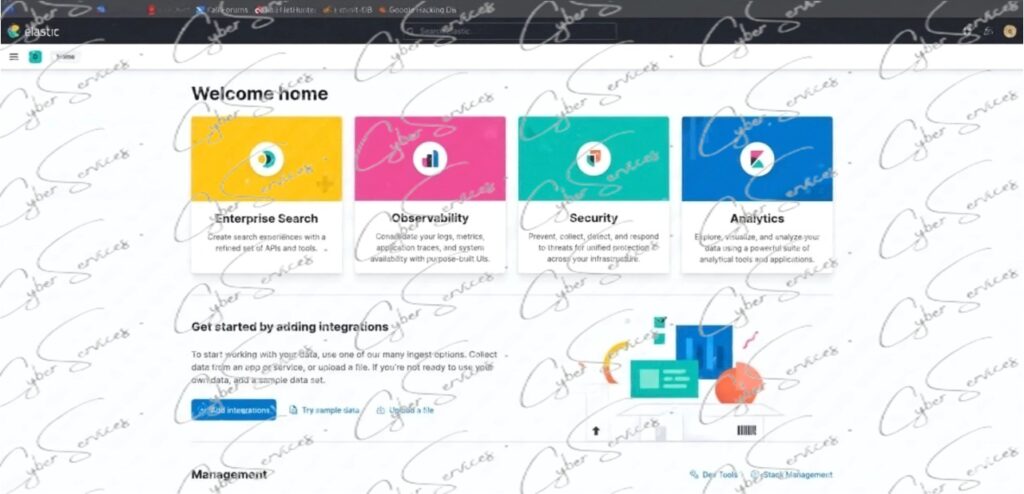
OSDA latest dump resources are commonly searched by cybersecurity learners preparing for the OffSec Defense Analyst certification and looking for updated study reports, SIEM investigation examples, detection notes, and SOC-200 preparation materials. The most useful resources help candidates understand how to investigate security events, correlate logs, recognize attacker behavior, and document defensible conclusions.
The OffSec Defense Analyst (OSDA) certification is associated with OffSec’s SOC-200: Security Operations and Defensive Analysis course. Unlike offensive penetration testing certifications, OSDA focuses on defensive investigation and understanding attacker activity through security telemetry.
This CyberServices.Store collection introduces OSDA-related study materials, explains the updated examination format, and helps candidates evaluate supplementary resources before purchasing.
What Is an OSDA Latest Dump?
An OSDA latest dump is a third-party search term often used to describe recently compiled OSDA study notes, technical reports, detection walkthroughs, or other examination preparation materials.
It is not an official OffSec product category.
The phrase can describe different resources, and its meaning depends on the publisher. Some materials may focus on security monitoring concepts, while others provide examples of how analysts investigate events in authorized training environments.
A legitimate study collection should clearly distinguish independent educational material from official examination content.
| Resource type | Primary purpose | Useful for |
|---|---|---|
| OSDA study notes | Review defensive security concepts | Structured revision |
| SIEM investigation reports | Explain evidence and analytical reasoning | Report preparation |
| Detection walkthroughs | Demonstrate investigation methodology | Practical skill development |
| Log analysis exercises | Practice event interpretation | Threat detection |
| SOC-200 reference guides | Organize course topics | Exam readiness |
| Reporting templates | Improve evidence presentation | Professional documentation |
Candidates should not assume that a product labeled OSDA latest dump contains current exam questions, confidential scenarios, or guaranteed passing solutions.
The best supplementary resources build skills that transfer to unfamiliar log datasets.
OSDA Exam Format: What Changed for 2026?
The most important development for OSDA latest dump preparation is the exam format update introduced by OffSec on September 10, 2025.
The revised OSDA examination uses pre-recorded security logs rather than requiring candidates to run attack phases themselves.
This change makes log interpretation, event correlation, and accurate documentation particularly important.
Current OSDA Exam Overview
| Exam component | Official requirement |
|---|---|
| Certification | OffSec Defense Analyst (OSDA) |
| Associated course | SOC-200 |
| Assessment type | Proctored practical examination |
| Practical exam time | 23 hours and 45 minutes |
| Report submission window | Additional 24 hours |
| Environment | SIEM-based investigation |
| Number of phases | 10 |
| Passing score | 75 out of 100 points |
| Main objective | Detect, explain, and document attacker actions |
| Reporting | Professional PDF report with supporting evidence |
Each phase contains attacker activity that candidates must identify and explain using the available telemetry.
Examples of activity categories include reconnaissance, authentication attacks, privilege escalation, lateral movement, and persistence.
Candidates must determine what happened and document the evidence supporting their findings.
The exam is not an unrestricted penetration testing engagement. OffSec explicitly prohibits logging into or exploiting simulated corporate systems.
For the current rules, consult the official OSDA Exam Guide.
Explore OSDA Latest Dump Study Materials
CyberServices.Store provides OSDA-related digital study resources intended to supplement independent SOC-200 preparation.
When selecting an OSDA latest dump resource, look for clear information about the material’s technical scope, file format, revision history, and intended educational use.
A useful collection may address SIEM investigations, attacker behavior analysis, evidence collection, incident timelines, and professional reporting.
Before purchasing, review the available product description and confirm that the materials match your learning objectives.
The product listings on this page provide the current purchase options and delivery information.
What Skills Does SOC-200 Teach?
SOC-200 develops foundational skills for detecting, analyzing, and responding to security incidents.
Its curriculum emphasizes Windows and Linux security, network fundamentals, log analysis, security monitoring, and the investigation of suspicious activity.
Candidates learn to examine evidence rather than assume that an alert automatically represents a confirmed compromise.
Security Monitoring and SIEM Fundamentals
A Security Information and Event Management (SIEM) platform collects and organizes security events from different systems.
Analysts use SIEM platforms to search events, identify unusual patterns, investigate alerts, and build timelines.
OSDA preparation should include understanding log fields, timestamps, event sources, filtering, and the relationship between individual records.
OffSec’s SOC-200 course introduces security monitoring technologies including ELK and Splunk.
However, the official OSDA examination environment is based on the provided ELK SIEM.
Windows Event Logs and Endpoint Telemetry
Windows systems generate records associated with authentication, processes, services, and security policy activity.
Additional endpoint telemetry can provide further context about suspicious behavior.
A candidate should understand the differences between an event being recorded, an alert being generated, and a security incident being confirmed.
Reliable analysis requires considering the event source, surrounding activity, and possible legitimate explanations.
Linux and Network Security Events
Linux authentication records, system logs, and network telemetry help analysts understand activity outside Windows environments.
Useful preparation topics include remote access events, account activity, service behavior, and communication patterns.
Network evidence may help establish connections between systems, but a connection alone does not prove malicious activity.
Attacker Behavior and Incident Timelines
A strong analyst connects individual events into a coherent explanation.
For example, repeated authentication failures may be relevant to a suspected password attack, but the surrounding evidence determines whether that interpretation is justified.
An incident timeline should describe the observed sequence, relevant systems, affected identities, and degree of confidence in the findings.
This analytical process is central to OSDA preparation.
OSDA Latest Dump: How to Review Detection Reports
An OSDA latest dump collection is most useful when its reports explain the reasoning behind each conclusion.
A well-structured investigation report should identify the event source, describe the suspicious activity, and explain why the evidence supports a particular interpretation.
A useful review framework includes five questions.
What happened? Identify the observed behavior without exaggerating its significance.
When did it happen? Establish the relevant timestamps and account for time-zone differences.
Which systems or identities were involved? Describe the affected assets and authentication context.
What evidence supports the conclusion? Reference the relevant records and explain their meaning.
What is the security impact? Distinguish suspicious behavior, attempted activity, and confirmed compromise.
| Investigation element | What a good study report explains |
|---|---|
| Event source | Where the relevant telemetry originated |
| Timeline | How events relate chronologically |
| Detection rationale | Why the activity merits investigation |
| Correlation | How multiple records support a finding |
| Attacker behavior | Which observed actions are supported |
| Confidence | What is confirmed and what remains uncertain |
| Security impact | What the evidence establishes |
| Documentation | How another analyst can verify the reasoning |
Avoid reports that present isolated screenshots without explaining their significance.
ELK SIEM and Detection Analysis for OSDA
ELK is particularly relevant to OSDA latest dump preparation because the official examination uses an ELK SIEM environment.
Candidates should become comfortable navigating security data, filtering records, and examining the relationships between events.
Search and Filtering Concepts
Effective investigation starts with identifying the appropriate data source and narrowing the relevant time window.
Candidates should understand common field types, event categories, timestamp handling, and the importance of preserving context.
A filtered result is not automatically a finding. Analysts must interpret the underlying events and determine whether the evidence supports the suspected activity.
Event Correlation
Individual security records often provide incomplete information.
Authentication activity, endpoint events, and network observations may become more meaningful when evaluated together.
Correlation helps establish whether separate events are related, but analysts must avoid assuming causation merely because events occur close together.
Detection Rules and False Positives
Detection rules help identify patterns associated with suspicious activity.
OffSec permits candidates to create or import detection rules in the examination ELK environment.
For preparation, learners should understand rule logic, data quality, false positives, and the importance of validating alerts against underlying evidence.
A reliable detection process balances sensitivity with analytical accuracy.
OSDA Exam Reporting Requirements
Reporting is a critical component of the OSDA examination.
Candidates must submit a professional report describing attacker actions, relevant evidence, and conclusions for the assessed phases.
OffSec requires supporting screenshots and the queries used to identify activity.
The documentation should be detailed enough for a technically competent reviewer to understand and reproduce the analysis.
Incomplete documentation can reduce the points awarded, even when a candidate has identified relevant activity.
Recommended Investigation Report Structure
A professional report can organize each investigation around:
- The relevant phase or investigation objective.
- A concise summary of the observed behavior.
- The supporting event sources and timestamps.
- The analytical reasoning connecting the evidence.
- The type of access or impact supported by the records.
- The conclusion and any remaining uncertainty.
During independent practice, candidates should develop their own reporting workflow and ensure that evidence is collected as the investigation progresses.
For the actual examination, follow the official submission requirements exactly.
OffSec requires a PDF report packaged in a .7z archive and submitted through its designated upload service.
OSDA Latest Dump vs. Official SOC-200 Training
A third-party OSDA latest dump should complement, not replace, official SOC-200 training.
The official course provides a structured curriculum and authorized practice environments.
Supplementary study materials can help organize revision, compare investigation approaches, and reinforce reporting concepts.
| Area | Official SOC-200 training | Supplementary study reports |
|---|---|---|
| Curriculum | Provider-maintained course | Publisher-defined coverage |
| Practical exercises | Official authorized labs | Depends on resource |
| Exam rules | Authoritative documentation | Must reference official guidance |
| Detection concepts | Structured learning path | Additional examples and explanations |
| Reporting practice | Course and exam expectations | Supporting templates and notes |
| Currency | Maintained by OffSec | Must be verified separately |
Use the official SOC-200 course page for training information and the OSDA Exam FAQ for examination guidance.
How to Prepare for the OSDA Exam
Candidates searching for OSDA latest dump resources often want a faster way to organize their preparation.
The most effective approach is to build a repeatable investigation process rather than memorize specific datasets.
Step 1: Strengthen Operating System Fundamentals
Review Windows and Linux administration, authentication, services, networking, and common security event sources.
Understanding normal system behavior is essential for identifying anomalies.
Step 2: Complete the SOC-200 Learning Path
Study the official course topics and complete the authorized exercises.
Pay particular attention to SIEM analysis, log interpretation, event correlation, and incident documentation.
Step 3: Practice Building Timelines
Use authorized training datasets to reconstruct activity across multiple event sources.
Document the evidence supporting each conclusion and distinguish confirmed events from assumptions.
Step 4: Develop a Reporting Template
Prepare a reusable structure for organizing observations, supporting evidence, timestamps, and conclusions.
Practice explaining why an event matters rather than simply describing what appears on screen.
Step 5: Review Updated Exam Rules
Confirm the current examination format, tool restrictions, reporting requirements, and submission procedure.
OffSec prohibits the use of AI chatbots and LLM assistance during the active OSDA examination.
Prepare your own permitted notes and reference materials before the exam.
Choosing OSDA Study Resources Before Purchasing
Before purchasing an OSDA latest dump resource, evaluate the material carefully.
Look for a transparent product description, an accurate publication or revision date, clearly identified file formats, and a realistic explanation of what the resource teaches.
Materials advertised as updated for 2026 should distinguish the current pre-recorded-log examination model from older descriptions of the assessment.
The terms “OSDA exam leak” or “OSDA braindump” should not be treated as evidence that a resource contains legitimate, authorized examination content.
Likewise, no third-party publisher can guarantee that a candidate will pass the official examination.
A trustworthy resource should support independent investigation skills and respect OffSec’s academic policies.
Browse OSDA Exam Preparation Resources
OSDA Latest Dump FAQ
What is OSDA latest dump?
OSDA latest dump is a third-party search term for updated OSDA-related study notes, investigation reports, detection walkthroughs, and supplementary preparation materials. It is not an official OffSec resource category.
What changed in the OSDA exam?
Starting September 10, 2025, OffSec changed the exam to use pre-recorded security logs. Candidates no longer need to run the attack phases themselves.
How long is the OSDA exam?
The official practical examination lasts 23 hours and 45 minutes, followed by an additional 24-hour report submission window.
How many points are required to pass OSDA?
Candidates must earn at least 75 out of 100 points.
How many phases are in the OSDA exam?
The examination contains 10 phases involving attacker activity that candidates must detect, analyze, and document.
Which SIEM is used in OSDA?
The official examination provides an ELK SIEM environment for investigating the supplied security telemetry.
Does OSDA require a professional report?
Yes. Candidates must document their findings, supporting evidence, investigation queries, and conclusions in a professional report.
Is OSDA an offensive security certification?
OSDA is a defensive security certification focused on threat detection, incident analysis, and security monitoring rather than exploiting target systems.
Can I use AI tools during the OSDA exam?
OffSec prohibits AI chatbots and direct LLM assistance during the active examination. Candidates should follow the provider’s current academic and examination policies.
Can an OSDA latest dump guarantee a pass?
No. Certification success depends on independent analytical skills, sufficient documentation, and compliance with OffSec’s requirements.
Where can I find OSDA study materials?
Review the CyberServices.Store OSDA resource collection for supplementary materials and use official SOC-200 training as the primary preparation source.
Final Thoughts: OSDA Latest Dump 2026
An OSDA latest dump resource is most valuable when it helps candidates understand how to investigate security events, correlate evidence, identify attacker behavior, and produce accurate technical documentation.
The updated OSDA examination places particular emphasis on analyzing pre-recorded logs through ELK SIEM and explaining findings across multiple phases.
Candidates should prioritize official SOC-200 training, independent investigation practice, reliable study notes, and professional reporting.
For supplementary resources, explore the CyberServices.Store OSDA collection and review each product’s documented contents before purchasing.
Explore OSDA Latest Dump Study Materials
OSDA Certification & SOC-200 Training Resources
OSDA Exam Dump Service
Access OSDA exam dump services, SOC-200 defensive security preparation resources, and certification study materials.
View OSDA ServiceOfficial SOC-200 Course
Review the OffSec SOC-200 course structure, OSDA exam requirements, and defensive security training methodology.
View SOC-200 DetailsOSWP Exam Dump
Explore OSWP exam dump services, PEN-210 wireless security certification resources, and preparation materials.
Explore OSWP DumpOSDA Exam Experience
Read OSDA exam experience, SOC-200 preparation tips, and defensive security certification guidance.
Read OSDA Guide